Areas of Expertise:
Making a Meaningful Impact: Preventing Heart Disease, One Patient at a Time
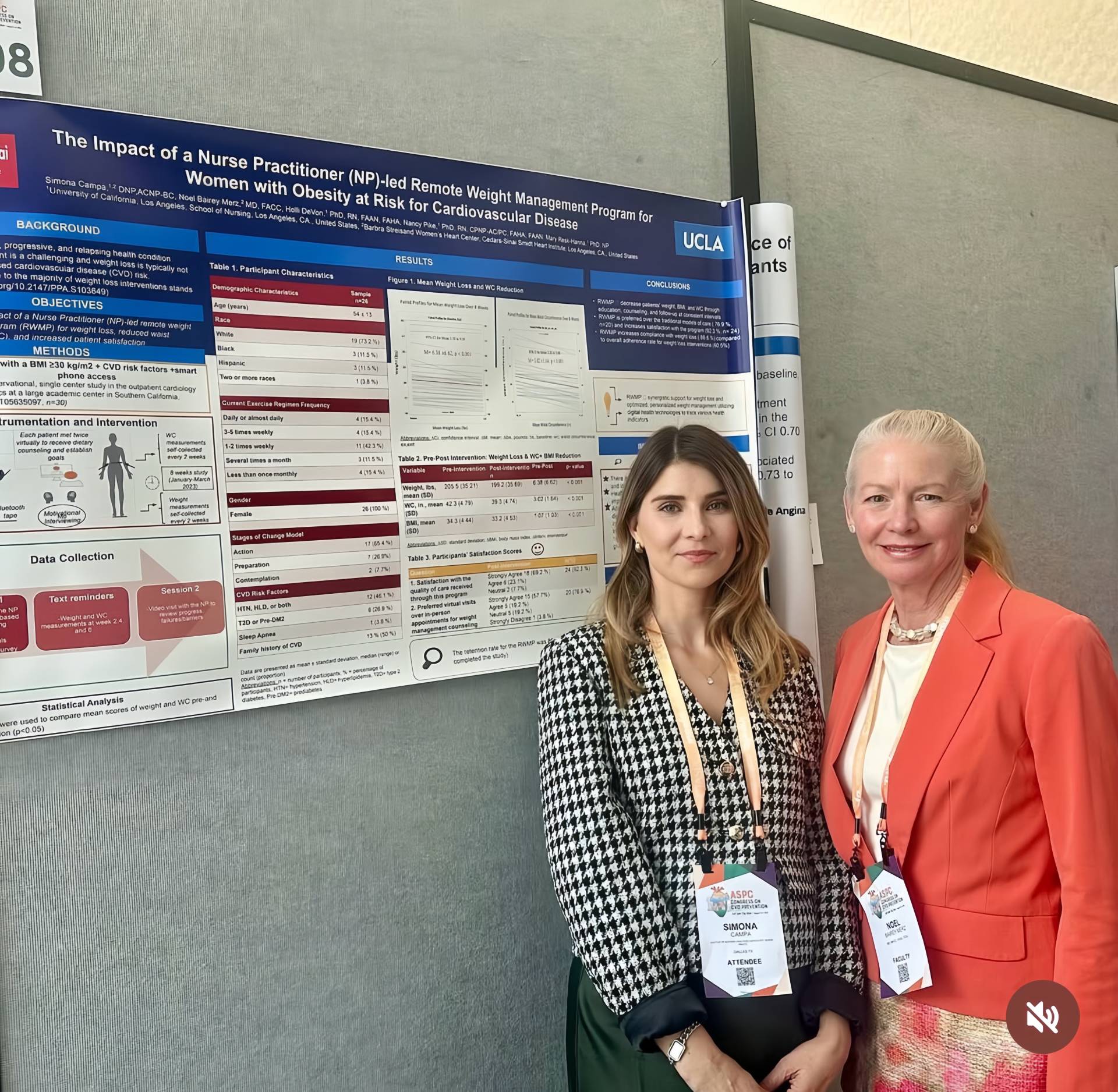
About Simona Campa, DNP-ACNP-BC
Expertise & Specialties
- Doctor of Nursing Practice (DNP) and Board-Certified Cardiology Nurse Practitioner with over a decade of cardiology experience. In her practice, she collaborates with a board certified cardiologist to provide evidence-based care to her patients.
- Practiced at UT Southwestern Medical Center (Texas) and Cedars-Sinai Medical Center (California) — two of the nation’s premier institutions .
- Cardiovascular disease prevention & risk assessment
- Women’s heart health & postpartum cardiovascular care
- Lipid disorders, hypertension, and nutrition
- Heart attack (myocardial infarction) prevention
- Familial dyslipidemias & endothelial dysfunction
- Premature menopause & coronary vasospasm
- Coronary microvascular disease & SCAD (spontaneous coronary artery dissection)
- MINOCA (myocardial infarction with no obstructive coronary artery disease)
Education & Approach
- Earned her Doctor of Nursing Practice at UCLA, specializing in cardiovascular prevention and cardiometabolic syndrome
- Deep expertise in managing cardiometabolic syndrome, including:
- Abdominal obesity
- Insulin resistance
- High blood pressure
- Abnormal cholesterol levels
- Coronary microvascular disease & SCAD (spontaneous coronary artery dissection)
- MINOCA (myocardial infarction with no obstructive coronary artery disease)
- Collaborates with leading cardiologists to provide:
- Personalized risk assessments
- Comprehensive, compassionate care
- Long-term strategies for lifelong heart health
Media & Events
Contact
How to Request an Appointment
You can directly book on the website via Elation.
To schedule an appointment, please email us at InsightHeartHealth@gmail.com or call us at 210-830-6577.
Accepted Insurances
Frequently Asked Questions
Where are you located?
We are located at 12740 Hillcrest Rd, Suite 118, Dallas, TX 75230
What is your fax number?
Our fax number is 214-286-6208.
You can also email us at InsightHeartHealth@gmail.com to inquire
What health insurance do you take?
- Please email us at InsightHeartHealth@gmail.com for additional questions.
Are you currently accepting new patients?
Yes. Please email us at InsightHeartHealth@gmail.com for additional questions
How do I send my previous medical records to your office?
Please email us at InsightHeartHealth@gmail.com
Educational Resources
What is Coronary Calcium Scoring?
Coronary calcium scoring is a quick, non-invasive imaging test that measures the amount of calcium buildup in the walls of your coronary arteries — the vessels that supply blood to your heart. The presence of calcium is an early sign of atherosclerosis (hardening of the arteries) and can indicate an increased risk of heart disease, even before symptoms appear.
Read more...
This simple test helps your healthcare provider assess your risk of developing cardiovascular problems and guides decisions about lifestyle changes or treatments to protect your heart health.
How Lifestyle Changes Can Reverse Cardiac Risk
Making intentional changes to your daily habits can significantly reduce — and in some cases even reverse — your risk of heart disease. A heart-healthy diet rich in fruits, vegetables, whole grains, and lean proteins helps lower cholesterol and blood pressure. Regular physical activity strengthens your heart, improves circulation, and supports a healthy weight.
Read more...
Gender - Specific Heart Health Risks
Both women and men face unique risks when it comes to heart disease, shaped by hormones, life stages, and lifestyle factors.
For women, pregnancy-related conditions such as preeclampsia, gestational diabetes, and high blood pressure can increase long-term cardiovascular risk.

Read more...
For men, risks often emerge earlier in life, with higher rates of early-onset coronary artery disease. Abdominal obesity, high blood pressure, and lower levels of protective HDL cholesterol contribute significantly. Men may also experience different patterns of symptoms, such as more frequent and earlier heart attacks compared to women.
Recognizing and addressing these gender-specific risks is essential for effective prevention and personalized heart care for everyone.